
Artificial intelligence and machine learning continue to change quickly, and beginners now have access to free training from Microsoft, Google, NVIDIA, OpenAI, Anthropic, IBM, and other providers. The options range from no-code introductions to hands-on courses in Python, machine learning, and generative AI.
Complete beginners can start with a short foundations course. Learners who already know some Python can move into machine learning, LLM application development, and AI agents. Each course below notes the prerequisites, free access, and available credentials.
1. AI for Beginners by Microsoft
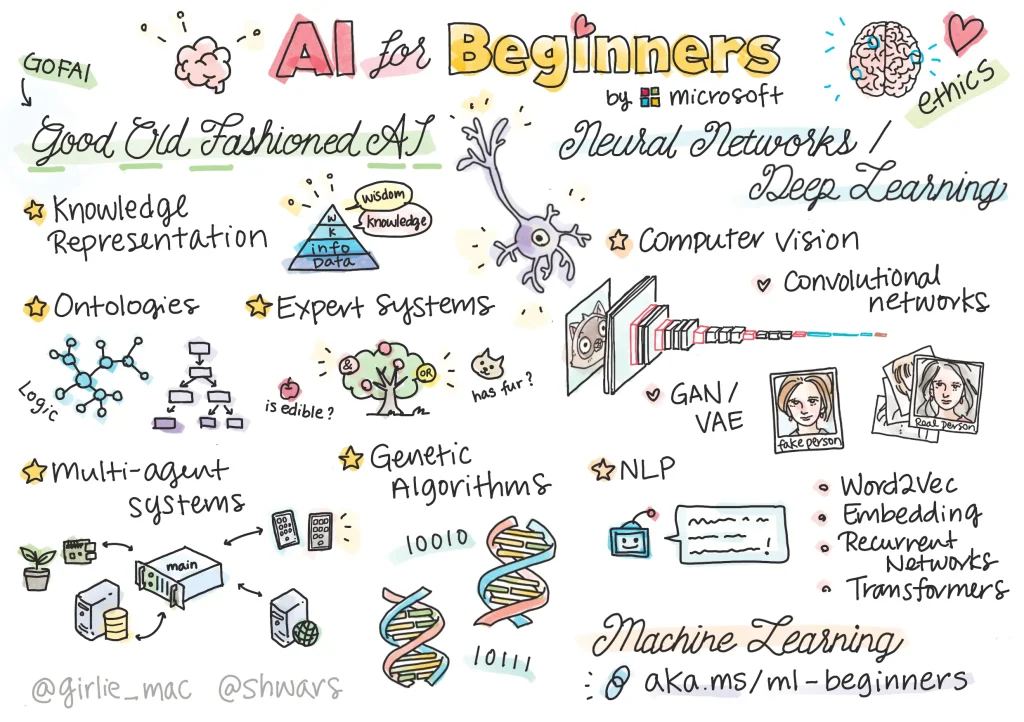
Microsoft’s AI for Beginners is a 12-week curriculum built around 24 core lessons, plus additional material. It covers symbolic AI, neural networks, computer vision, natural language processing, transformers, large language models, reinforcement learning, multi-agent systems, and responsible AI.
- Study AI history, knowledge representation, and expert systems.
- Build neural networks with PyTorch and TensorFlow.
- Work through computer vision and natural language processing lessons.
- Learn transformers, LLMs, reinforcement learning, multi-agent systems, and AI ethics.
Prerequisites: Basic Python is useful for the notebooks and labs. Microsoft also provides beginner-friendly examples for learners who are new to AI programming.
Free Access: The curriculum, notebooks, quizzes, and labs are available through Microsoft’s public course site and GitHub repository.
Best For: Learners who want a long, structured AI curriculum with real code and a wide range of AI topics.
2. Machine Learning Crash Course by Google
Google’s Machine Learning Crash Course combines videos, interactive visualizations, and practice exercises. The refreshed curriculum covers classic machine learning foundations and newer topics such as large language models, AutoML, production ML systems, and fairness.
- Learn linear and logistic regression.
- Study classification, numerical data, and categorical data.
- Work through neural networks and embeddings.
- Learn large language models from tokens to Transformers.
- Study production ML, AutoML, and fairness.
Prerequisites: You should be comfortable with algebra, basic statistics, and programming. Google recommends Python, NumPy, and pandas prework; linear algebra is also useful.
Free Access: Free on Google for Developers, including the learning modules and practice material.
Best For: Beginners who already know basic programming and want a serious introduction to machine learning.
3. AI Foundations by OpenAI Academy
AI Foundations is a short introduction to artificial intelligence, large language models, and ChatGPT. It focuses on useful prompting habits, context, output evaluation, and responsible AI use.
- Learn core AI and large language model concepts.
- Practice clearer prompts and useful context.
- Review AI outputs and improve results.
- Build responsible AI habits for everyday work.
Prerequisites: None. The course is designed for learners with no technical background.
Free Access: Free with a ChatGPT account. The course takes about 70 minutes and includes a course-completion certificate.
Best For: Complete beginners who want a fast introduction before choosing a longer AI or machine learning course.
4. Claude 101 by Claude Academy
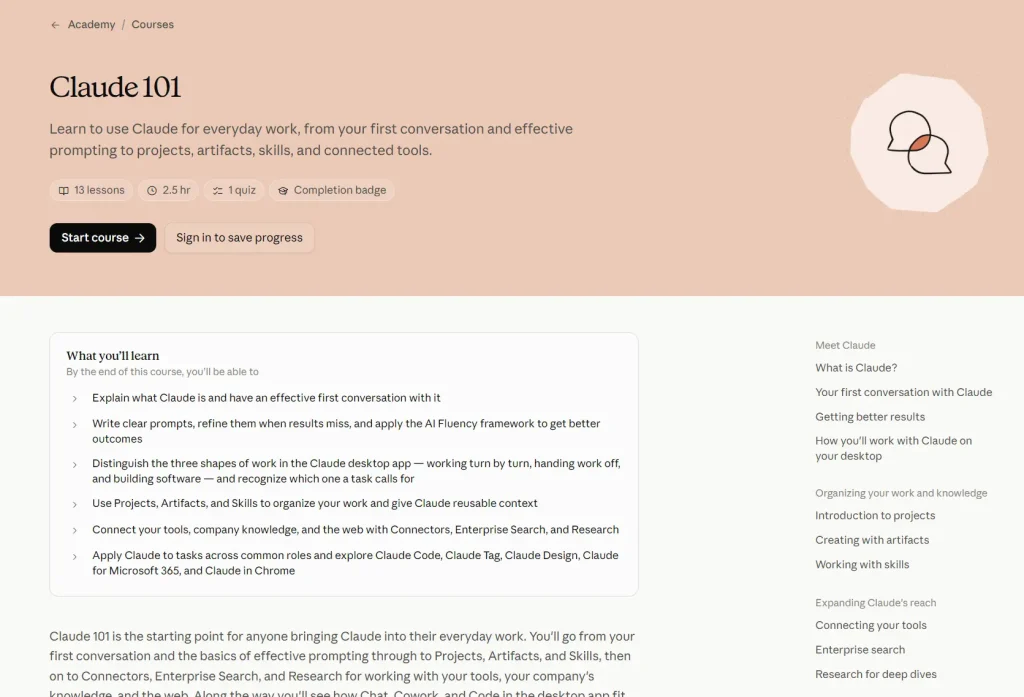
Claude 101 teaches the main Claude features through a 13-lesson course. The curriculum starts with conversations and prompting, then moves into projects, artifacts, skills, connected tools, enterprise search, and research.
- Start productive conversations with Claude.
- Write prompts for clearer results.
- Work with projects, artifacts, and skills.
- Use connected tools, search, and research features.
Prerequisites: No coding knowledge is required.
Free Access: The course is free. It contains 13 lessons, one quiz, and about 2.5 hours of material. A Claude account is required to save quiz progress and earn the completion badge.
Best For: Beginners who use Claude and want a structured introduction to its everyday work features.
5. Fundamentals of Machine Learning and Artificial Intelligence by AWS

AWS uses this foundational Skill Builder course to introduce artificial intelligence, machine learning, deep learning, generative AI, and common AI use cases. The material is designed as an entry point into AWS AI learning.
What You Learn:
- Learn the relationship between AI, machine learning, and deep learning.
- Review common AI and machine learning use cases.
- Build a foundation for later AWS AI training.
Prerequisites: The course is aimed at learners starting with AI and machine learning concepts.
Free Access: AWS lists Fundamentals of Machine Learning and Artificial Intelligence among its free Skill Builder training resources.
Best For: Beginners who want a short AI and machine learning overview tied to the AWS ecosystem.
6. Introduction to Machine Learning by Google
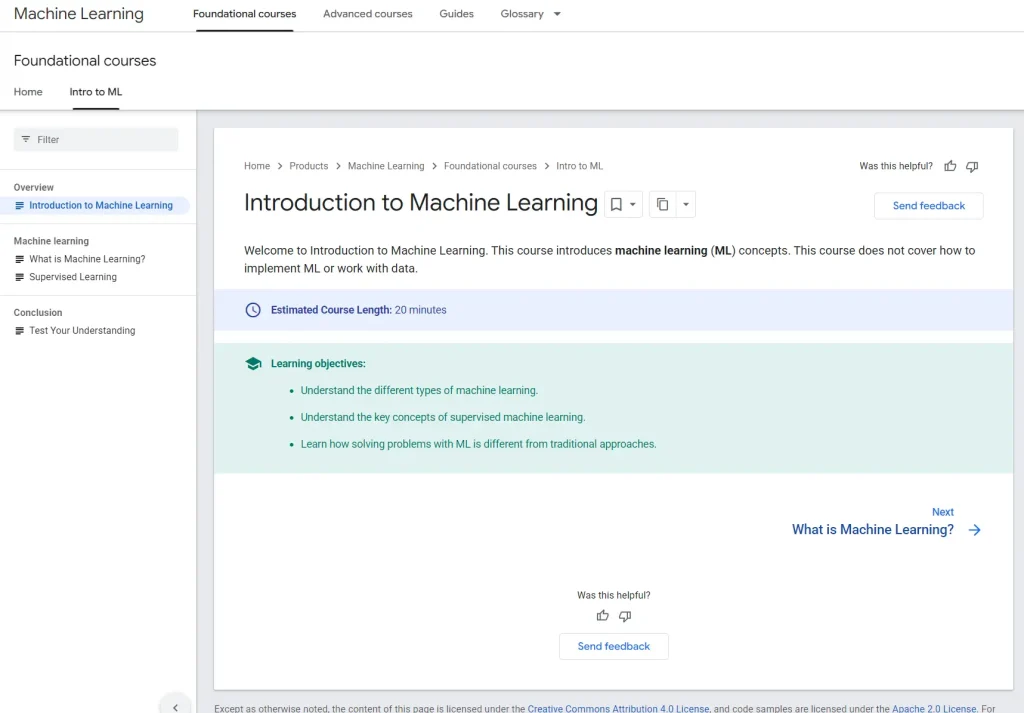
Google’s Introduction to Machine Learning is a 20-minute conceptual course for first-time ML learners. It explains the main types of machine learning, supervised learning, and how ML problem solving differs from traditional programming approaches.
- Learn the main types of machine learning.
- Understand core supervised learning concepts.
- See how machine learning approaches a problem.
Prerequisites: None for the conceptual material.
Free Access: All course material is available free on Google for Developers.
Best For: Complete ML beginners who want a short foundation before starting a hands-on course.
7. Intro to Machine Learning by Kaggle
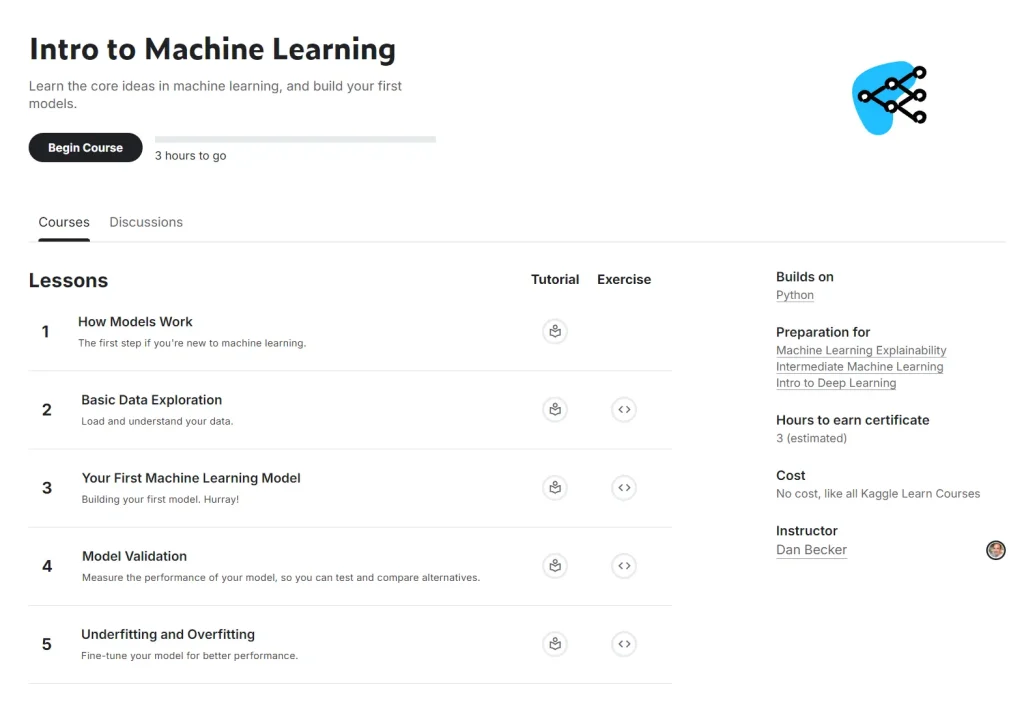
Kaggle’s Intro to Machine Learning is a compact hands-on course that moves from basic model concepts to building and validating a first machine learning model. The course uses short tutorials and coding exercises.
- Understand how machine learning models work.
- Explore data and build a first model.
- Validate models and identify overfitting.
- Build random forest models.
Prerequisites: The course builds on Python. Kaggle’s Intro to Programming and Python courses can provide that foundation first.
Free Access: No cost. Kaggle estimates about three hours to complete the course and earn its certificate.
Best For: Beginners who want to build a model quickly and learn through code exercises.
8. Elements of AI by University of Helsinki & MinnaLearn
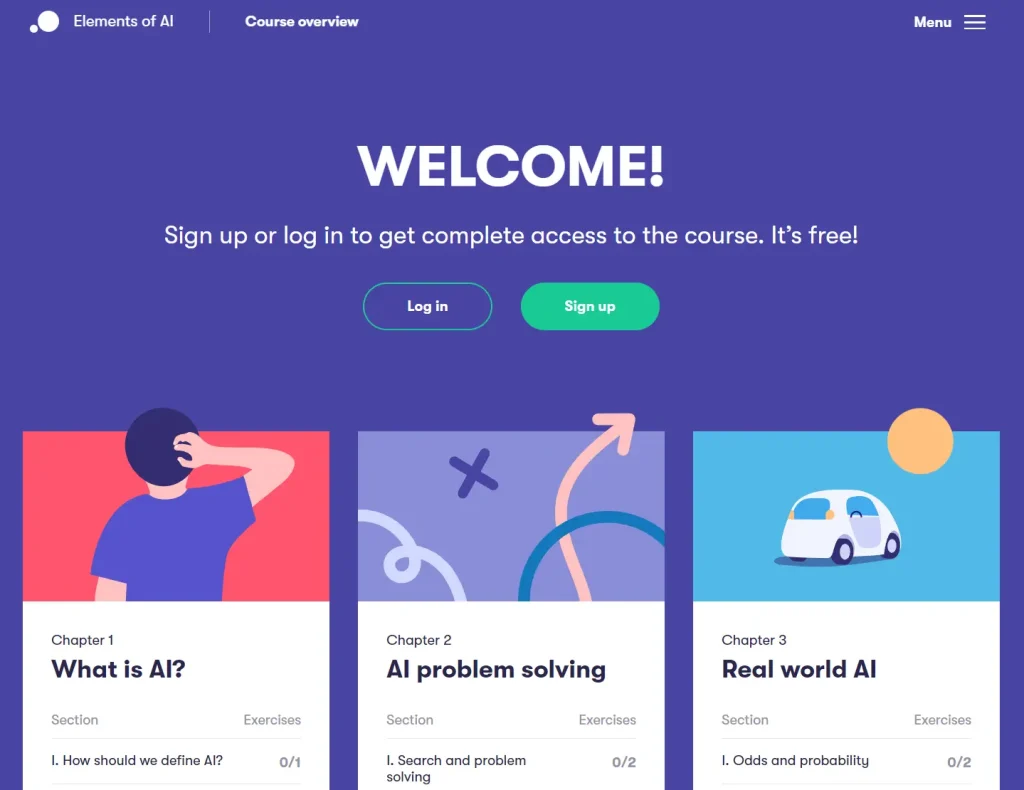
Elements of AI teaches artificial intelligence through concepts, exercises, and real-world examples. It is an accessible choice for learners who want to understand AI before learning Python or model-building tools.
- Learn the definitions and major areas of artificial intelligence.
- Study search, problem solving, probability, and AI reasoning.
- Learn machine learning and neural network basics.
- Examine social and ethical implications of AI.
Prerequisites: No programming is required.
Free Access: The complete course is free after registration. Learners who meet the completion requirements can receive a digital course certificate.
Best For: Non-technical beginners, students, educators, and anyone who wants a conceptual AI foundation.
9. AI Literacy by IBM SkillsBuild
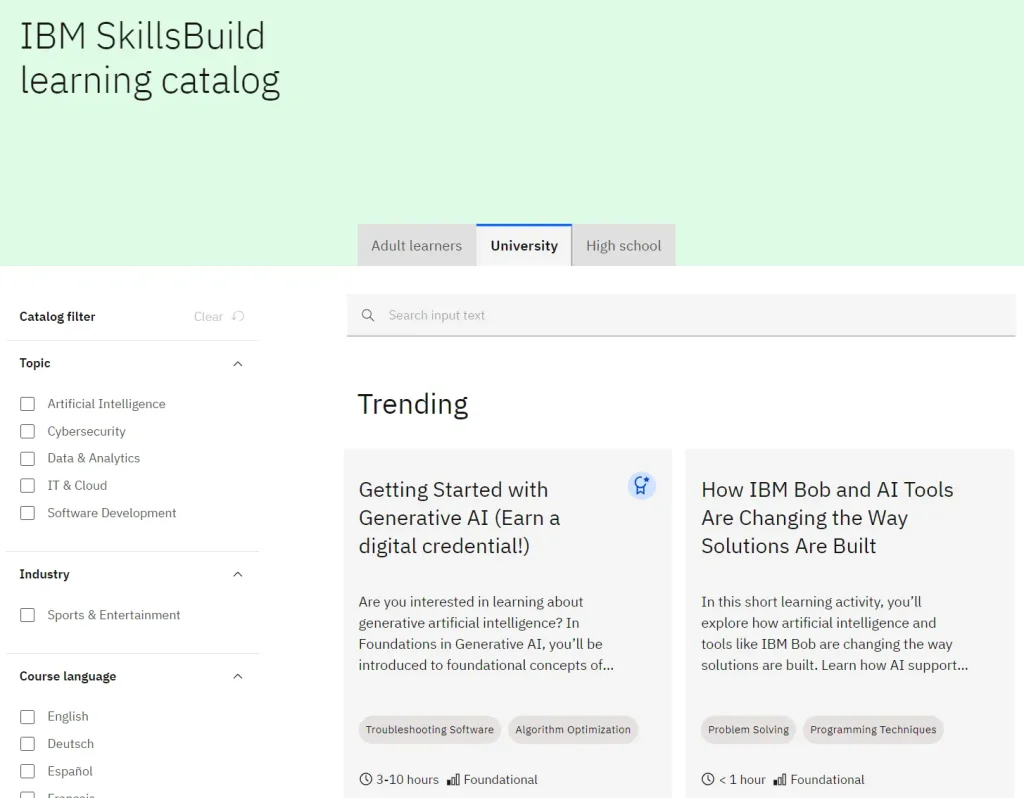
IBM’s AI Literacy course introduces how AI works, where it is used, how people collaborate with AI systems, and how to evaluate AI responsibly. The course also includes a hands-on business challenge with an AI assistant.
- Learn how AI systems learn and improve.
- Review common AI use cases across industries.
- Practice responsible AI use and evaluation.
- Build basic human-AI collaboration skills.
Prerequisites: None. The course is listed at a foundational level.
Free Access: Available to registered IBM SkillsBuild learners. The course takes about four hours and awards an IBM digital badge after successful completion.
Best For: Beginners who want AI literacy plus a digital badge.
10. AI for All: From Basics to GenAI Practice by NVIDIA
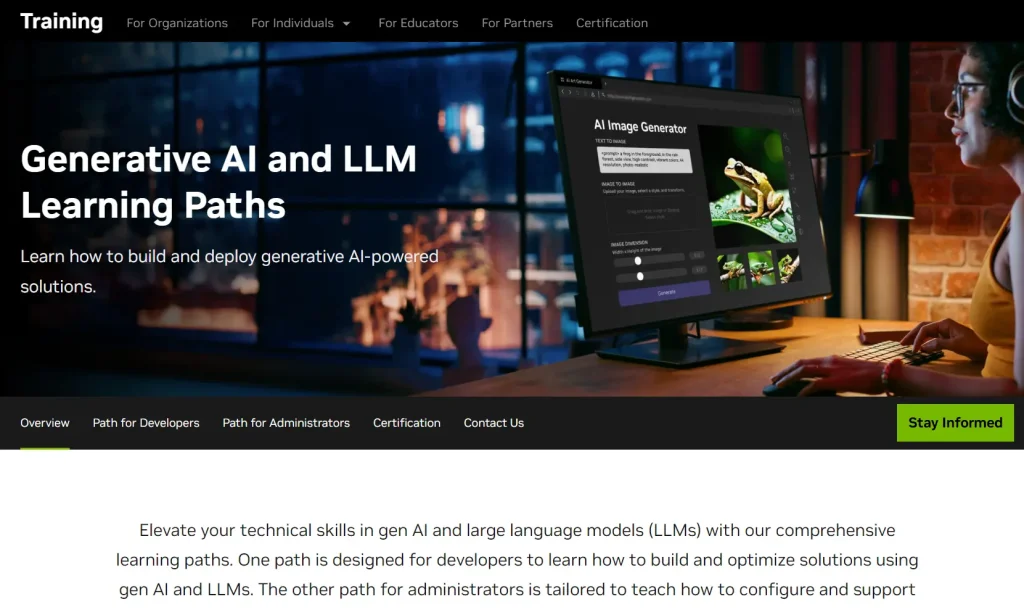
NVIDIA’s AI for All course introduces the modern AI landscape for IT professionals, network administrators, system administrators, and other technical learners who are new to AI. It serves as a concise starting point before NVIDIA’s deeper developer and infrastructure training.
- Learn foundational artificial intelligence concepts.
- Understand the role of generative AI in modern computing.
- Build AI context for technical and infrastructure roles.
Prerequisites: The course is introductory and is aimed mainly at IT professionals and infrastructure learners.
Free Access: NVIDIA lists AI for All as a free self-paced course. Its current learning path lists about 2.5 hours of material.
Best For: IT professionals who want an AI and generative AI overview before moving into infrastructure or developer training.
Comparison Table
| Course Name | Provider | Duration | Free Type |
|---|---|---|---|
| AI for Beginners | Microsoft | 12 weeks | Free curriculum |
| Machine Learning Crash Course | Self-paced | Completely free | |
| AI Foundations | OpenAI | About 70 minutes | Completely free |
| Claude 101 | Anthropic | 2.5 hours | Free course access |
| ML & AI Fundamentals | AWS | Self-paced | Free Skill Builder course |
| Introduction to Machine Learning | 20 minutes | Completely free | |
| Intro to Machine Learning | Kaggle | About 3 hours | Completely free |
| Elements of AI | University of Helsinki | Self-paced | Completely free |
| AI Literacy | IBM | 4 hours | Free with registration |
| AI for All | NVIDIA | 2.5 hours | Completely free |
Free AI Courses to Take After the Basics
These courses suit learners who already have some programming, mathematics, or AI background.
Generative AI for Beginners by Microsoft
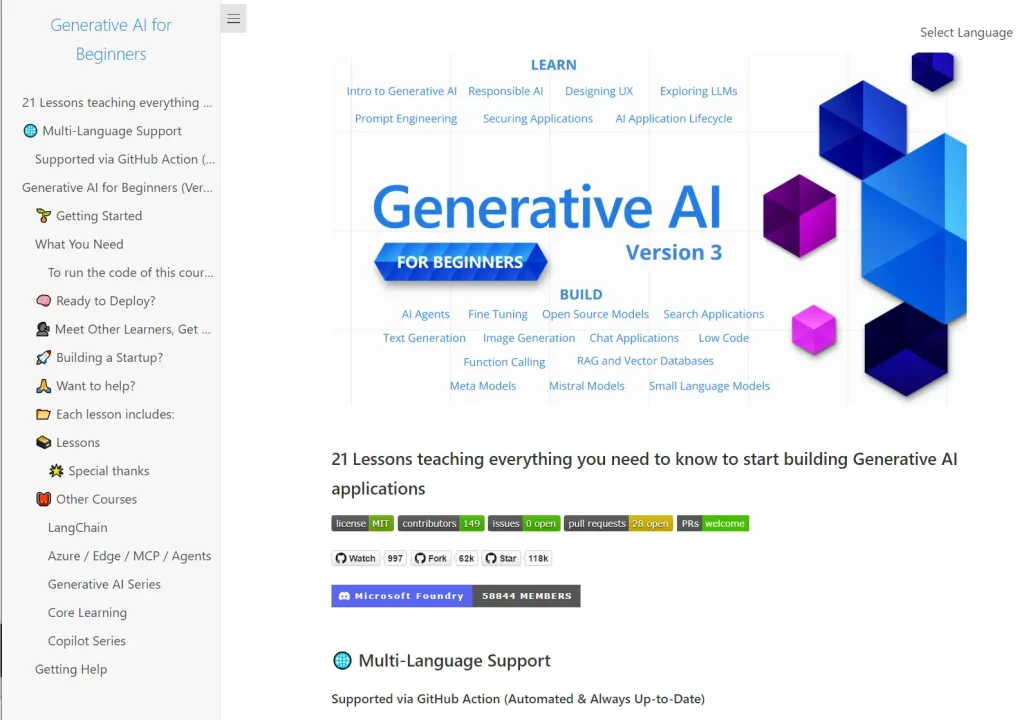
This free 21-lesson curriculum moves from generative AI concepts into Python and TypeScript application development. The build lessons cover prompting, text and chat apps, function calling, RAG, vector databases, agents, fine-tuning, and small language models. Some exercises use cloud or API services, and Foundry Local supports local model work in compatible lessons.
AI Fundamentals by IBM SkillsBuild

IBM’s AI Fundamentals credential covers natural language processing, computer vision, machine learning, deep learning, chatbots, neural networks, AI ethics, and AI applications.
Generative AI Explained by NVIDIA
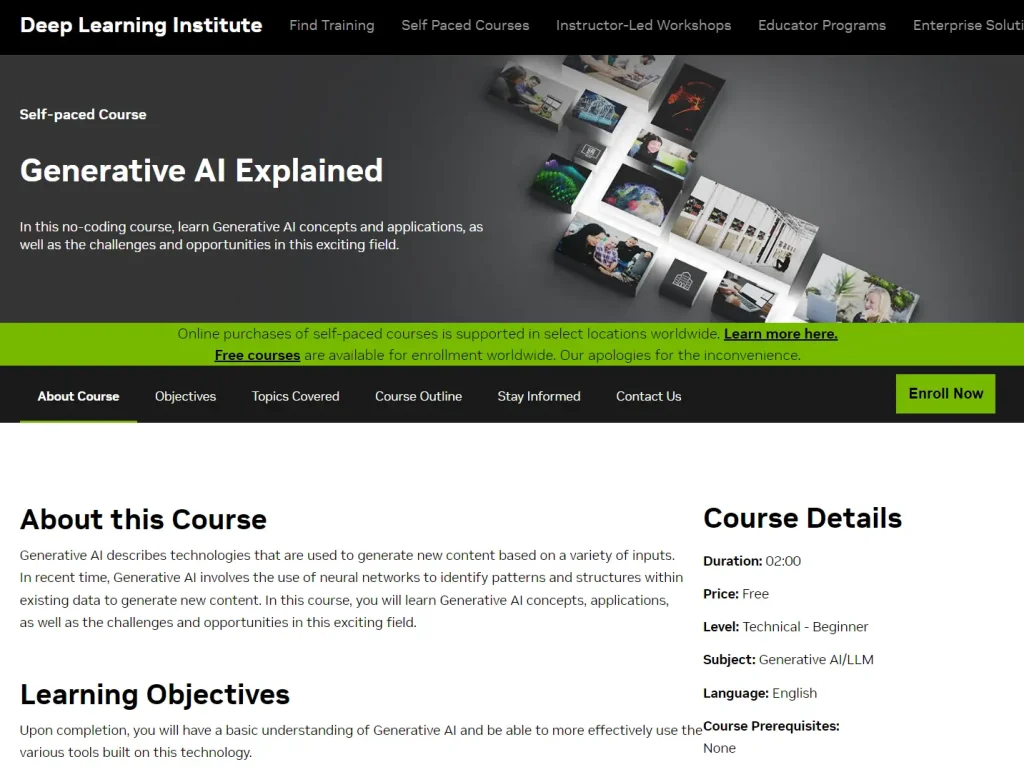
This free two-hour course explains generative AI concepts and applications. NVIDIA recommends basic machine learning or deep learning knowledge before starting it.
AI Agents Course by Hugging Face
The free Hugging Face Agents Course covers agent fundamentals, smolagents, LlamaIndex, LangGraph, tools, planning, use cases, and a final project. Learners need basic Python and LLM knowledge.
Introduction to Machine Learning (6.036) by MIT

MIT 6.036 is a mathematically demanding machine learning course covering supervised learning, neural networks, classification, and reinforcement learning. It is best saved for the point when you already know Python, calculus, and linear algebra.
AI Agents for Beginners by Microsoft
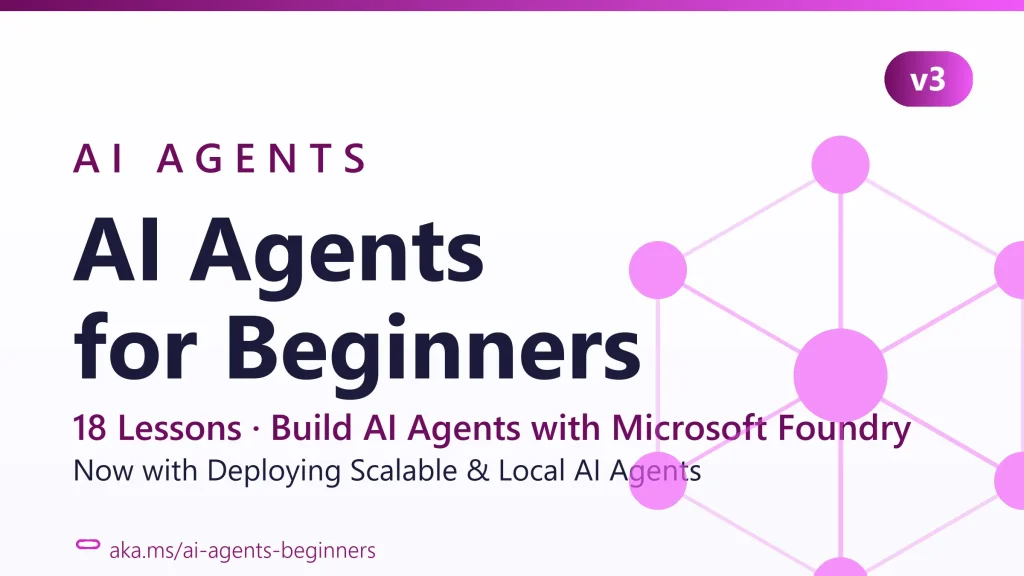
Microsoft’s AI Agents for Beginners course covers agent fundamentals, design patterns, RAG, multi-agent systems, observability, local agents, and security. The current code examples use Microsoft Agent Framework with Microsoft Foundry, and the main Foundry exercises require an Azure account.
Applied AI Foundations and Agents and Workflows by OpenAI Academy
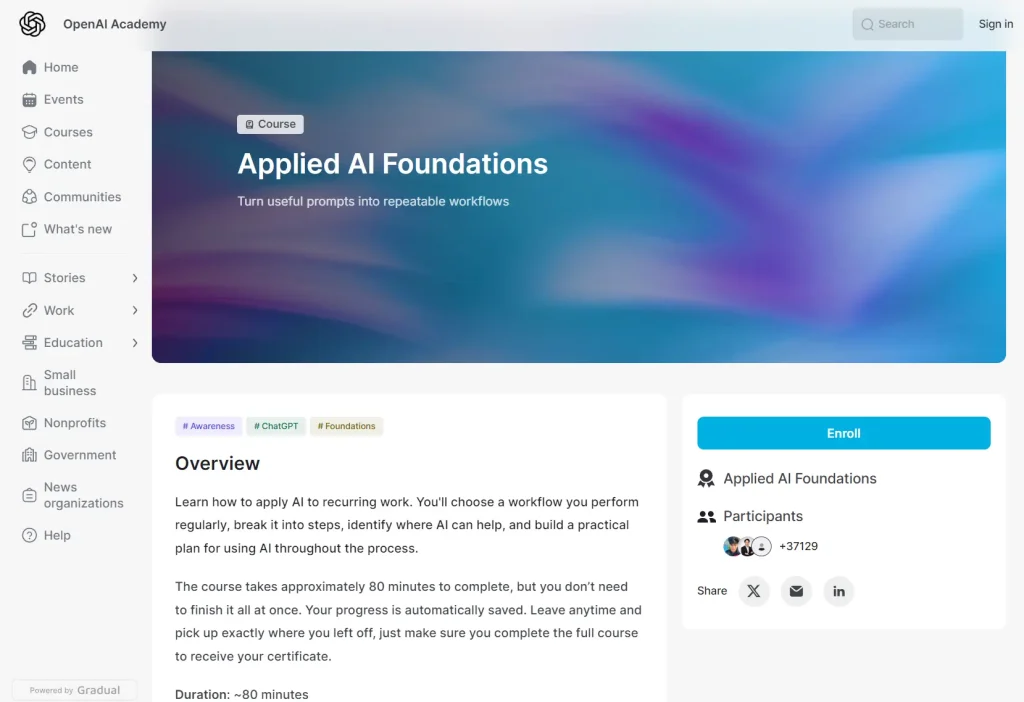
OpenAI Academy offers these free self-paced follow-ups after AI Foundations. Applied AI Foundations focuses on repeatable work processes, and Agents and Workflows introduces structured agent tasks. Each course is estimated at 75–90 minutes.
Learning Path Guide: Which Course Should You Start With?
No-Code AI Foundations
Start with: OpenAI AI Foundations → Claude 101 → Elements of AI → IBM AI Literacy
This path starts with practical AI use and continues into machine learning concepts, AI reasoning, responsible use, and real-world applications. All four courses can be started with no programming background.
Machine Learning Foundations
Start with: Google Introduction to Machine Learning → Kaggle Intro to Machine Learning → Google Machine Learning Crash Course → MIT 6.036
Google’s 20-minute introduction establishes the basic vocabulary. Kaggle moves quickly into model building. Google’s Crash Course expands the technical foundation, and MIT 6.036 is an advanced next step for learners who want mathematical depth.
Developer Generative AI Path
Start with: Microsoft AI for Beginners → Microsoft Generative AI for Beginners → Hugging Face AI Agents Course
This sequence starts with Python-based AI foundations and continues into LLM application development, RAG, function calling, and agents. The Hugging Face course is most useful after you understand Python and LLM basics.
AI Assistants and Workflows
Start with: OpenAI AI Foundations → Claude 101 → OpenAI Applied AI Foundations → OpenAI Agents and Workflows
This path focuses on using AI effectively for work. It progresses from prompting and output evaluation to repeatable processes and structured agent tasks.
Related Resources
FAQs
Which free AI course is best for a complete beginner?
OpenAI AI Foundations is the shortest starting point on this list at about 60–75 minutes. Elements of AI is a good choice for a deeper conceptual foundation. Learners who want to start with machine learning can take Google’s 20-minute Introduction to Machine Learning before moving to Kaggle or Google’s Machine Learning Crash Course.
Which courses require no coding?
OpenAI AI Foundations, Claude 101, AWS Fundamentals of Machine Learning and Artificial Intelligence, Google Introduction to Machine Learning, Elements of AI, IBM AI Literacy, and NVIDIA AI for All can be started with no programming background. Microsoft AI for Beginners, Google Machine Learning Crash Course, and Kaggle Intro to Machine Learning are more useful with basic programming skills.
Are the certificates free?
Credentials vary by course. OpenAI AI Foundations issues a course-completion certificate, Claude 101 has a completion badge, Kaggle Intro to Machine Learning has a certificate, Elements of AI offers a free digital certificate, and IBM AI Literacy awards a digital credential.
Can I learn machine learning before taking calculus?
Yes. Google’s Introduction to Machine Learning requires no implementation work, and Kaggle’s Intro to Machine Learning starts with practical model building. Google Machine Learning Crash Course recommends algebra and basic statistics. Courses such as MIT 6.036 are better saved for the point when you are comfortable with calculus and linear algebra.
What is the difference between a free course, free audit, and free trial?
A free course keeps its core learning material available at no charge. Free audit access usually removes graded work or a certificate from a paid course. A free trial opens a paid service for a limited period and begins charging after the trial period unless you cancel. This guide excludes trial-only access from the free-course list.
Last updated: Aug 21, 2026



I am new to AI. I am here to learn and utilise AI beyond personal gains but to benefit my community and nation at large.