ChatGPT is easy to use until your account fills up with long conversations, saved prompts, research notes, and answers you want to find again. Scrolling through an old thread, saving a useful chat, carrying context into another AI service, or writing a long prompt without accidentally sending it can quickly become tedious.
A browser extension can remove a lot of that friction. The extensions below improve the parts of ChatGPT that tend to get annoying with daily use, from conversation search and export to memory, voice input, browser context, and message controls.
Quick Comparison
| Extension | Best For |
|---|---|
| 1. AITOPIA | Multi-model sidebar, files, and AI agents |
| 2. ChatGPT | Tab context and browser control from ChatGPT |
| 3. ChatGPT Exporter | Exporting and archiving conversations |
| 4. AI Toolbox | Cross-platform chat organization and search |
| 5. Superpower ChatGPT | Deep ChatGPT organization and prompt utilities |
| 6. Chat AI Ctrl+Enter Sender | Multiline prompts without accidental sends |
| 7. Scroll | Navigating and searching long AI chats |
| 8. VoiceWave | Voice typing and read-aloud across AI sites |
| 9. Personal AI Memory | Local conversation memory across AI services |
| 10. Chatterclock | Tracking ChatGPT message usage by model |
10 Best ChatGPT Browser Extensions
Last Updated: September 21, 2026
1. AITOPIA – Multi-Model AI Sidebar & Agents
Best for: Keeping several AI models, file analysis, and browser-side AI tools in one extension
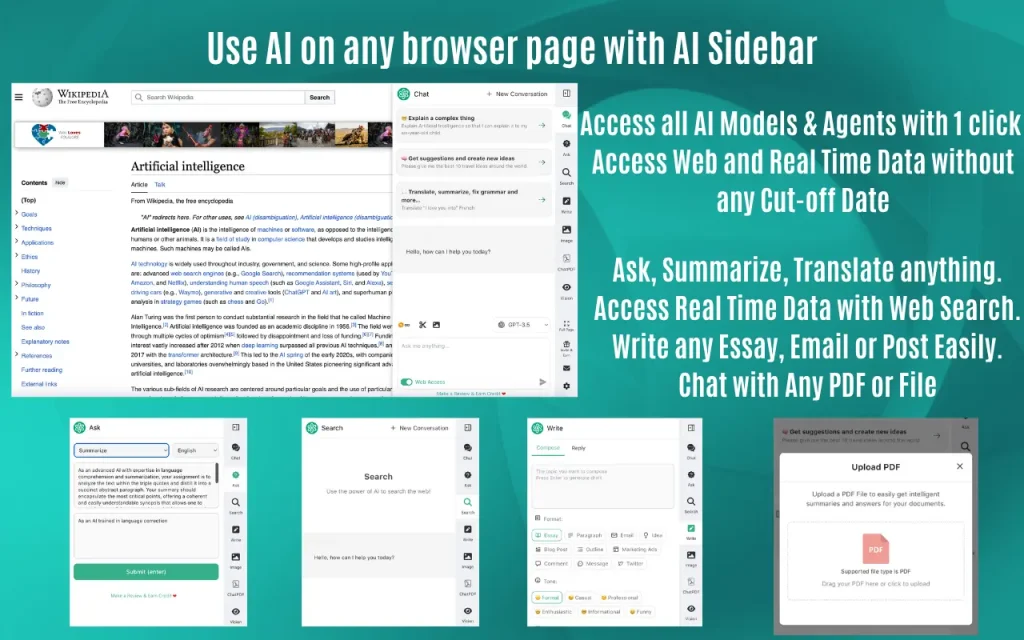
AITOPIA places a multi-model AI sidebar beside the page you are viewing. It includes OpenAI, Claude, Gemini, DeepSeek, and other models, plus file analysis, web access, image tools, and an AI Agent Marketplace. It is the broadest option here when you want one browser extension for several AI services rather than a ChatGPT-only utility.
Key Features:
- Access to multiple text, image, voice, and video AI models
- AI Agent Marketplace with pre-built agents for specific tasks
- Upload and analyze PDFs, documents, spreadsheets, and images
- Web access for current information
- Group chat for comparing responses from multiple models
- Context-menu actions for summarizing, translating, rewriting, and explaining selected text
- Search-engine integration and YouTube summaries
Pros:
- One sidebar provides access to several AI providers and browser-side tools.
- File analysis and agents extend it beyond simple page summarization.
Cons:
- The large feature set takes longer to configure than a single-purpose extension.
- Some features use paid plans or in-app purchases.
2. ChatGPT – Official OpenAI Browser Extension
Best for: Using ChatGPT beside your browser tabs and letting ChatGPT work with browser context
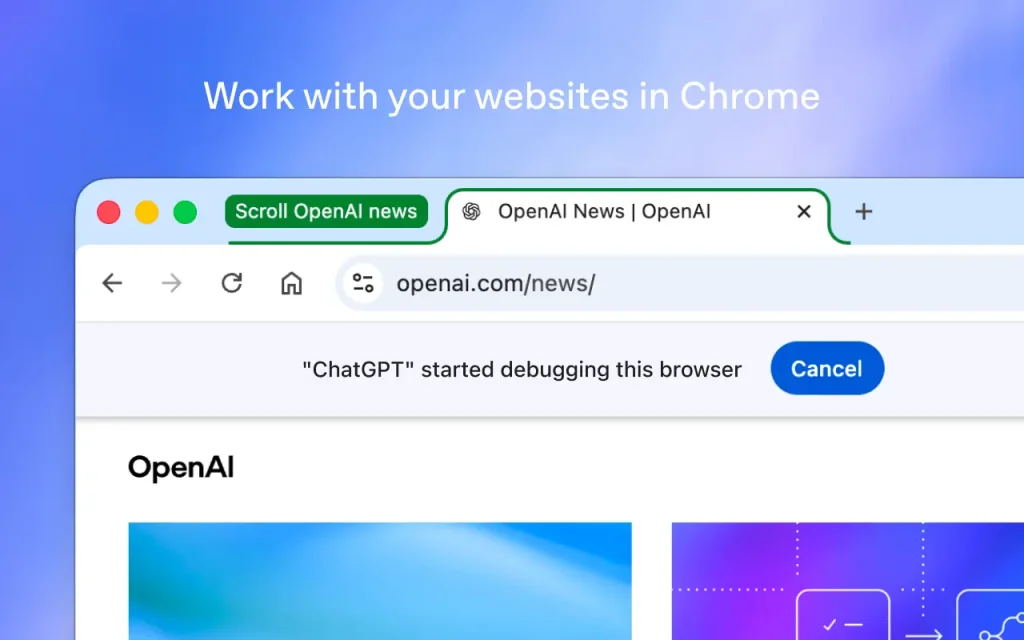
OpenAI’s official ChatGPT extension puts ChatGPT beside the page you are viewing and can use context from open tabs. It also connects Chrome to the ChatGPT desktop app for browser tasks such as researching across signed-in sites, working with documents, and testing webpages. Sensitive actions can require confirmation before ChatGPT continues.
Key Features:
- Side chat inside the browser
- Context from open browser tabs
- Browser control from the ChatGPT desktop app
- Works with signed-in browsing sessions when permission is granted
- Confirmation prompts for sensitive browser actions
- Support for Chrome and selected Chromium-based browsers, with feature availability varying by browser and workspace
Pros:
- Official OpenAI extension with direct ChatGPT browser integration.
- Useful when a task depends on the tabs and signed-in sites already open in your browser.
Cons:
- Deeper browser-control features depend on the ChatGPT desktop app and account or workspace availability.
- It does not replace specialized tools for exports, chat organization, or local memory.
3. ChatGPT Exporter – Export Chats to PDF, Markdown, JSON & More
Best for: Saving selected ChatGPT conversations as reusable files
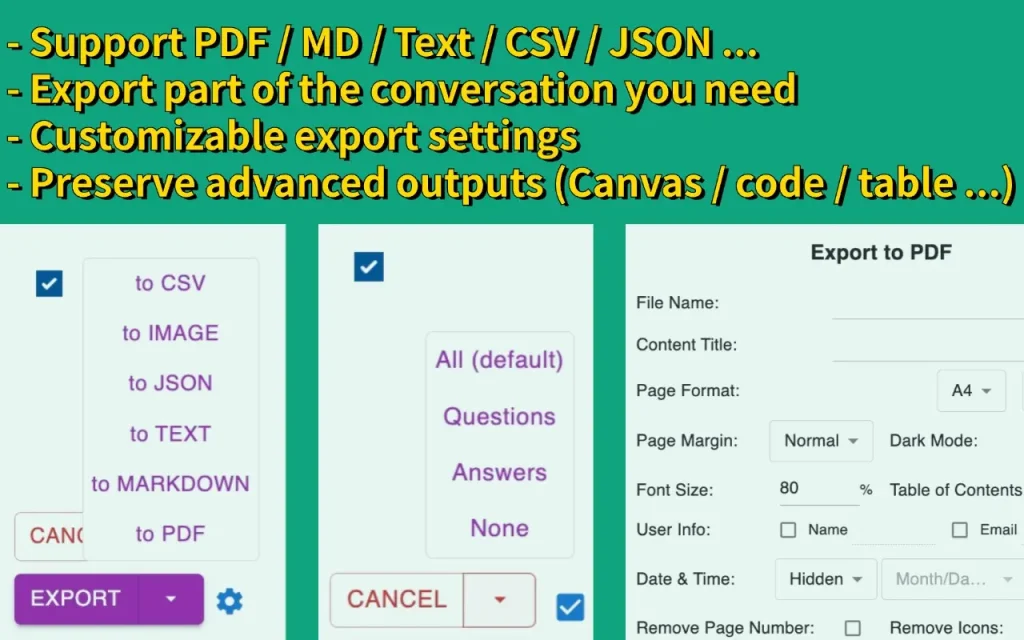
ChatGPT Exporter saves full conversations or selected messages as PDF, Markdown, Text, CSV, or JSON. It preserves code blocks, formulas, tables, Canvas content, Deep Research references, and web-search sources, which makes it useful for documentation, research archives, and technical notes.
Key Features:
- Export to PDF, Markdown, Text, CSV, and JSON
- Select individual messages or a range of messages
- Custom PDF layout, fonts, margins, page breaks, and table of contents
- Preserves code blocks, formulas, tables, Canvas content, and research references
- Copy exported content directly to the clipboard
- Supports group conversations and anonymous GPT conversations
Pros:
- Selective export avoids saving an entire conversation when only a few messages matter.
- Technical formatting survives export better than plain copy and paste.
Cons:
- PDF export is limited to three free exports per day.
- Extra PDF exports and some premium options require payment.
4. AI Toolbox – Folders, Search, Prompts & Export
Best for: Organizing conversations across ChatGPT, Claude, Gemini, and Grok
AI Toolbox, formerly ChatGPT Toolbox, has expanded from a ChatGPT organizer into a cross-platform chat-management extension. It adds nested folders, full-text search, saved prompts, prompt chains, bookmarks, bulk export, smart tags, and conversation references across four major AI assistants.
Key Features:
- Nested folders and cross-platform folders
- Full-text search across message content
- Prompt library, variables, and prompt chains
- Bookmarks, smart tags, and message-level navigation
- Bulk export and delete tools
- Context Mentions for pulling previous conversations into a new chat
- Context-window and usage indicators on supported services
- Support for ChatGPT, Claude, Gemini, and Grok
Pros:
- Full-text search and shared folders are useful when your AI work is split across several services.
- The same prompt and organization tools work across multiple assistants.
Cons:
- The feature set is excessive if you only need a simple ChatGPT folder extension.
- Conversation content is cached locally for search, but organizational data such as folders and saved prompts can sync to your account.
5. Superpower ChatGPT
Best for: Adding advanced organization, prompt management, and navigation directly to ChatGPT
Superpower ChatGPT extends the native ChatGPT interface with folders, search, prompts, notes, highlights, export tools, a conversation minimap, queues, and conversation references. It stays focused on ChatGPT, which makes it a better match than a multi-model organizer when most of your AI work already lives there.
Key Features:
- Folders, subfolders, pins, notes, and chat search
- Prompt manager, prompt templates, prompt chains, and prompt queue
- Conversation minimap and tree map for long or branched chats
- Message highlights, bookmarks, and references to previous conversations
- Bulk export, delete, and archive tools
- Image gallery and audio controls
- Custom instruction profiles and model switching
Pros:
- Deep ChatGPT-specific organization goes beyond the native sidebar.
- Minimap, search, and highlights help with very long conversations.
Cons:
- The number of controls creates a busier ChatGPT UI.
- Some advanced features require the Pro version.
6. Chat AI Ctrl+Enter Sender
Best for: Writing multi-line prompts without sending them by accident

Chat AI Ctrl+Enter Sender, previously known as ChatGPT Ctrl+Enter Sender, changes the composer behavior across several AI chat services. Enter inserts a line break. Ctrl+Enter on Windows or Cmd+Enter on Mac sends the message. It is a small extension, but the behavior is useful when prompts regularly contain multiple paragraphs, code, or structured instructions.
Key Features:
- Ctrl+Enter or Cmd+Enter to send
- Enter inserts a line break
- Works with ChatGPT, Claude, Perplexity, Mistral AI, Microsoft Copilot, and other supported chats
- Quick on/off toggle from the extension icon
Pros:
- Prevents accidental sends when writing longer prompts.
- The same keyboard behavior works across several AI chat services.
Cons:
- It has one job and does not add organization, search, or export features.
- AI sites can change their composer UI and temporarily break extension behavior.
7. Scroll – Table of Contents for Long AI Chats
Best for: Finding previous prompts, responses, and sections inside long conversations
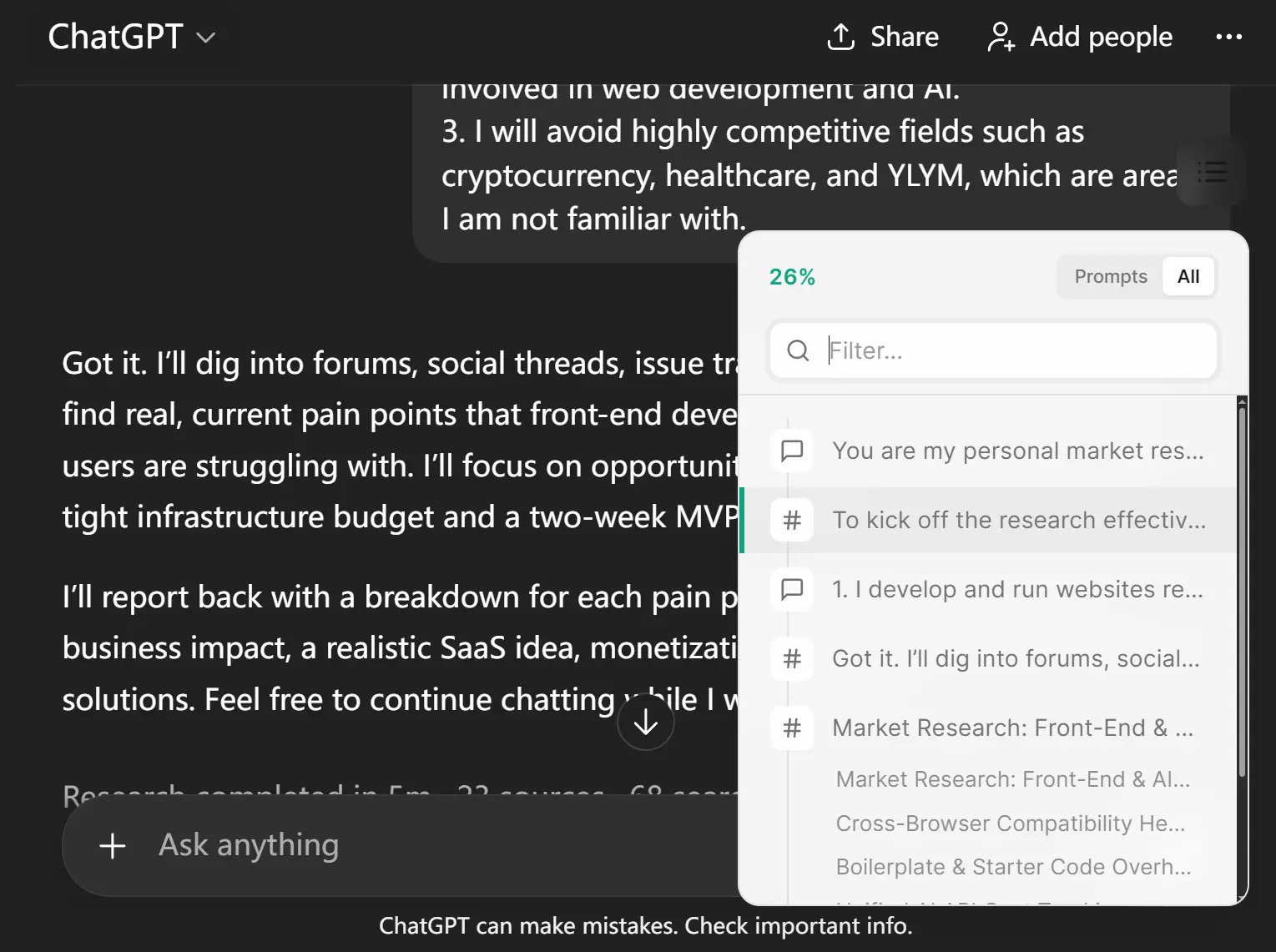
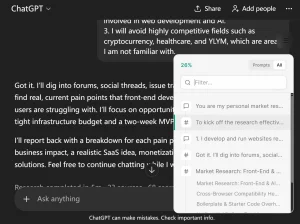
Scroll builds a floating table of contents for ChatGPT, Claude, and Gemini conversations. It indexes prompts and responses as the chat grows, lets you jump directly to any turn, and can search or export the conversation. The extension runs locally in the browser and does not require an account.
Key Features:
- Clickable table of contents for prompts and responses
- Heading detection inside long AI responses
- Search and filter within the current conversation
- Keyboard navigation
- Copy individual turns
- Export conversations to Markdown, PDF, or JSON
- Local processing with no conversation data sent to a server
Pros:
- Solves the navigation problem without replacing the native chat interface.
- Works across ChatGPT, Claude, and Gemini with one extension.
Cons:
- It is designed for desktop Chromium browsers.
- Works better for longer conversations.
Full Scroll Review · Chrome Web Store
8. VoiceWave – Voice Mode, Speech to Text & Read Aloud
Best for: Using one set of voice controls across AI chatbots and ordinary webpages

VoiceWave adds speech-to-text, text-to-speech, and voice commands to ChatGPT and other AI chatbots. Its voice typing and read-aloud tools also work on regular webpages, which gives it a broader role than the voice mode built into any one AI service.
Key Features:
- Voice conversations with ChatGPT and other supported AI chatbots
- Speech recognition across more than 145 languages
- Replay controls for AI messages
- Voice typing in text fields on ordinary webpages
- Read-aloud for selected webpage text
- Custom voice commands, shortcuts, and automatic punctuation
Pros:
- The same voice tools work across several AI services and normal websites.
- Read-aloud and voice typing extend beyond the AI chat window.
Cons:
- Voice input requires microphone access.
- It is less useful if your only requirement is the native voice mode of one AI service.
9. Personal AI Memory – Local Memory Across AI Chats
Best for: Recalling previous conversations across several AI services without sending the archive to a remote memory server
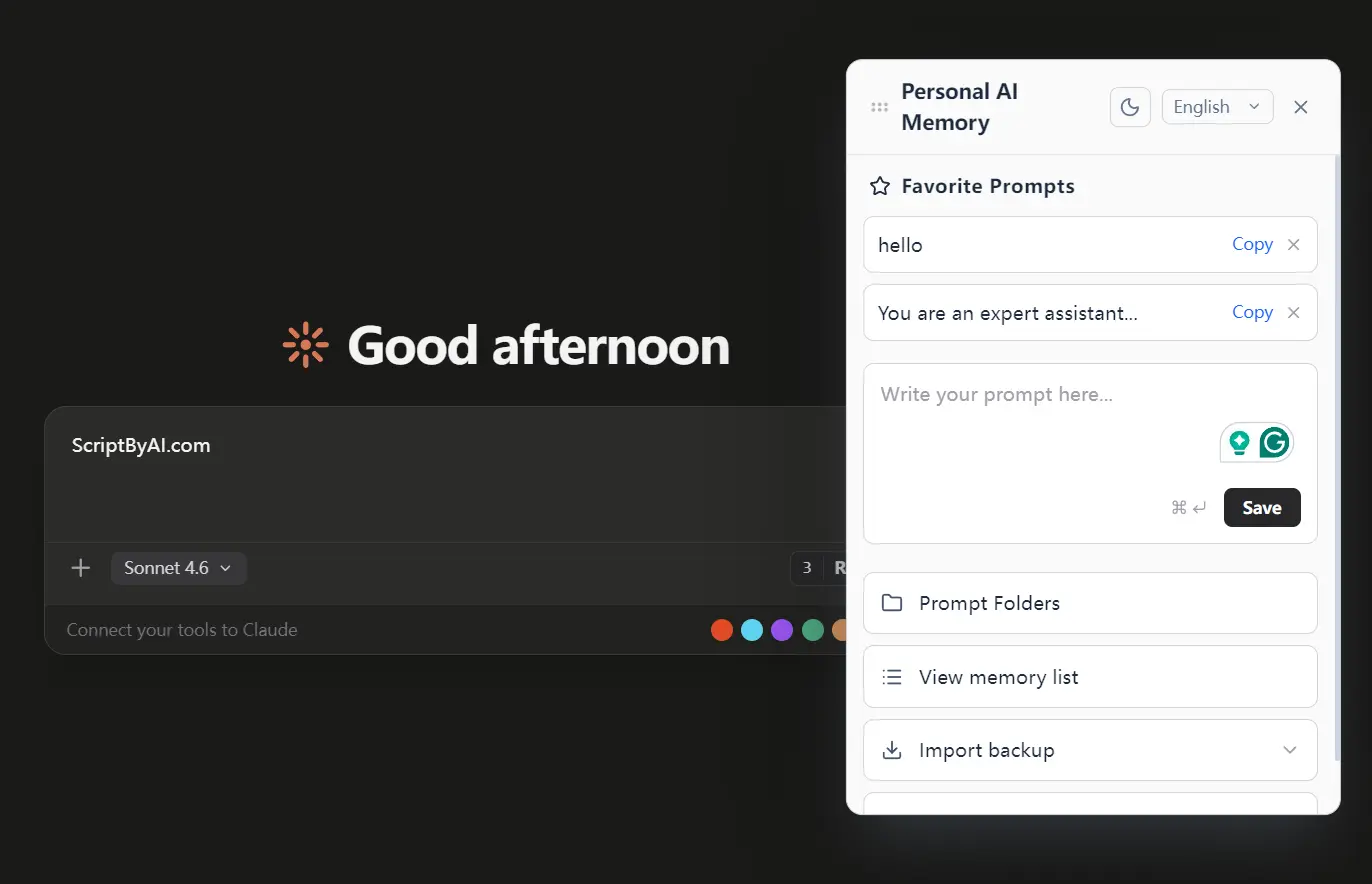
Personal AI Memory archives conversations from ChatGPT, Claude, Gemini, Perplexity, and Grok inside the browser. It stores the conversation database in IndexedDB, lets you search past exchanges, and can bring relevant memories back into supported AI chats when you need previous context.
Key Features:
- Automatic local archiving of supported AI conversations
- Search across past ChatGPT, Claude, Gemini, Perplexity, and Grok conversations
- Recall previous context into new ChatGPT or Claude conversations
- Import and export the local memory database
- Offline access to stored conversations
- No account required for the extension itself
Pros:
- Conversation history stays in local browser storage.
- One memory archive can span several major AI chat services.
Cons:
- No built-in cloud sync.
- Storage depends on the browser’s IndexedDB allocation and available local space.
Full Personal AI Memory Review · Chrome Web Store
10. Chatterclock – ChatGPT Message Tracking
Best for: Keeping a local count of messages sent to ChatGPT models with usage limits

Chatterclock counts the messages you send to different ChatGPT models and groups them by usage window. It does not change ChatGPT or increase your limits. Its purpose is to give you a running local count when you want more visibility into your own message usage.
Key Features:
- Tracks sent messages by ChatGPT model
- Groups counts by relevant time window
- Shows message counts before you encounter a model limit
- Stores tracking data locally and does not collect user data
Pros:
- Provides a simple usage counter that ChatGPT does not always expose in the chat interface.
- The extension has no unrelated productivity features.
Cons:
- It does not expose OpenAI’s account-side quota state.
- Its usefulness depends on the models and plans that currently apply message limits.
FAQ
Q: Do ChatGPT browser extensions work with free ChatGPT accounts?
A: Extensions such as Scroll and Chat AI Ctrl+Enter Sender work around the browser interface, while extensions that call their own AI models or premium services can use separate plans, accounts, or usage limits. Check the extension’s current access requirements before installing it.
Q: Should I use OpenAI’s official ChatGPT extension or a third-party extension?
A: Use the official ChatGPT extension when you want tab context, side chat, or browser control connected to ChatGPT. Third-party extensions make more sense for jobs that the official extension does not focus on, such as exporting chats, organizing conversation history, adding local memory, navigating long threads, or changing keyboard behavior.
Q: Can I use several ChatGPT extensions at the same time?
A: Yes. Extensions with unrelated jobs usually coexist more easily than two products that both rewrite the same ChatGPT sidebar or composer. Install only the features you need, and disable one extension if overlapping controls begin to conflict.
Q: Are ChatGPT browser extensions safe?
A: Data handling varies by extension. Review the permissions requested by the extension, its Chrome Web Store privacy disclosure, and the developer’s privacy policy before giving it access to ChatGPT conversations or webpage content.
Q: Which ChatGPT extension should I install first?
A: Match the extension to the missing feature. Use OpenAI’s ChatGPT extension for browser context and control, AITOPIA for multi-model access, AI Toolbox or Superpower ChatGPT for organization, ChatGPT Exporter for archives, Scroll for long conversations, and Personal AI Memory for local cross-platform recall.
Changelog
09/21/2026
- Added OpenAI’s official ChatGPT browser extension.
- Added Scroll and Personal AI Memory.
- Removed unavailable or redundant entries, including WebChatGPT and the previous ChatGPT RTL listing.
- Updated ChatGPT Toolbox to its current AI Toolbox name and cross-platform feature set.
- Updated VoiceWave and Chat AI Ctrl+Enter Sender links.
- Rebuilt the comparison table and refreshed extension descriptions, limits, and privacy notes.
01/01/2026
- Updated the extension list.
07/19/2023
- Removed invalid extensions.
- Added new extensions and fixed extension links.