Free AI Legal Case Outcome Predictor – CaseOdds AI
Free legal case predictor powered by AI. Upload documents or describe your situation to get instant analysis and success probability from CaseOdds.ai.
CaseOdds.ai is a free AI-powered legal analysis tool that predicts court case outcomes. It analyzes legal situations and provides instant predictions about success probability, strengths, weaknesses, and strategic recommendations.
You face a major decision when involved in legal proceedings. The stakes are high and traditional attorney consultations cost hundreds of dollars per hour just to get an initial assessment.
CaseOdds.ai processes case details (either through document uploads or text descriptions) and generates predictions based on thousands of legal precedents. You can use this information to decide whether to pursue litigation, prepare for defense, or consider settlement options before investing significant legal fees.
Features
- Precedent Analysis: The AI reviews thousands of similar cases to generate realistic outcome assessments based on actual court decisions and legal patterns.
- Fast Processing: Receive a complete case analysis within minutes after submission.
- Flexible Input Methods: The platform accepts PDF document uploads (such as complaints, contracts, and correspondence) or natural language descriptions.
- Privacy Protection: All case information goes through encryption protocols. The platform doesn’t share user data with third parties or retain identifying information beyond the analysis session.
- Strategic Recommendations: Each analysis includes specific action items to strengthen the case. These recommendations cover evidence collection, documentation improvements, and procedural considerations.
- Zero Cost Structure: The service requires no payment information, subscription commitment, or usage limits.
Case Studies
I tested CaseOdds.ai using a specific scenario involving a tenant-landlord dispute in Georgia. The goal was to see if the AI could handle the nuance of “normal wear and tear” versus actual damage.
The Scenario
The user played the role of a Defendant (Tenant) being sued by a landlord. The dispute involved a withheld security deposit, charges for wall damage, and an abandoned washer/dryer. The tenant possessed photos of pre-existing conditions and text messages showing the landlord ignored requests to remove the appliance.
The Analysis
CaseOdds.ai processed the input and returned a “Defendant Likely to Win” prediction with “Medium” confidence. The analysis was surprisingly granular.
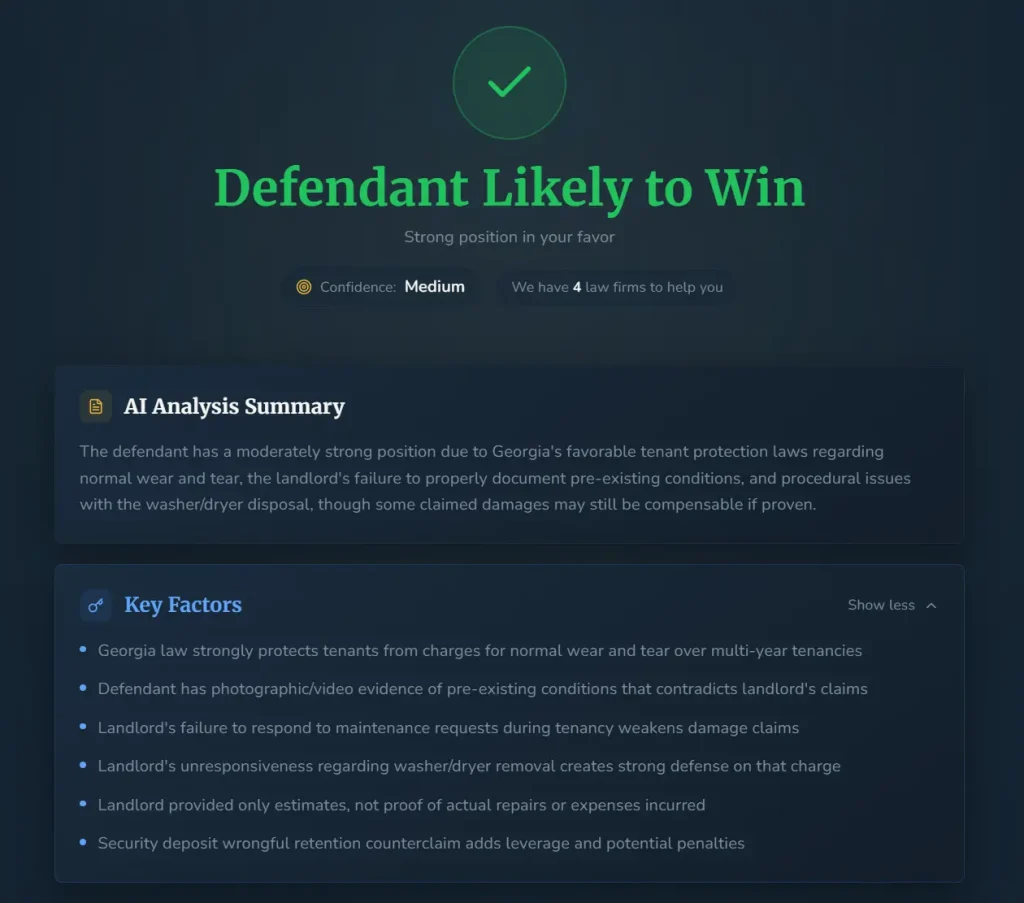
Key Findings Identified by AI:
- Statutory Knowledge: The tool cited O.C.G.A. § 44-7-35. It noted that wrongful retention of the deposit could result in double or triple damages.
- Evidence Evaluation: It flagged the tenant’s move-in photos as a critical strength. This evidence directly contradicted the landlord’s claims.
- Communication Gaps: The AI highlighted the landlord’s failure to respond to maintenance requests. It marked this as a factor that weakened the landlord’s credibility.
Strategic Recommendations
The tool didn’t just predict a win. It provided a checklist for court preparation:
- Chronological Organization: It suggested arranging video evidence by date to clearly establish the timeline.
- Penalty Calculation: It advised the tenant to calculate specific statutory penalties to present as a counterclaim.
- Witness Preparation: It recommended preparing testimony if anyone else witnessed the move-in condition.
The Verdict
The tool correctly identified that the burden of proof shifts to the tenant because a move-in report was signed. However, it balanced this against the strong photographic evidence. This level of nuance is rare in free automated tools.
Use Cases
- Small Claims Disputes: Landlords and tenants can evaluate security deposit disputes, property damage claims, or lease violations before filing in small claims court. The tool helps both parties understand their position strength and potential outcomes based on local tenant protection laws.
- Contract Disagreements: Business owners facing breach of contract situations can assess their position before pursuing litigation. The analysis covers enforceability issues, damages calculations, and jurisdictional considerations.
- Employment Matters: Individuals dealing with wrongful termination, discrimination claims, or wage disputes can evaluate case strength before engaging legal representation. The predictions consider employment law precedents and statutory protections.
- Personal Injury Claims: Accident victims can get initial assessments of liability and damages potential. The analysis helps users understand whether settlement offers align with typical case outcomes in similar situations.
- Consumer Protection Cases: People dealing with fraud, defective products, or deceptive practices can evaluate whether their situation meets legal thresholds for successful claims under consumer protection statutes.
How to Use It
1. Visit caseodds.ai and click the “Check My Odds — It’s Free” button to get started.
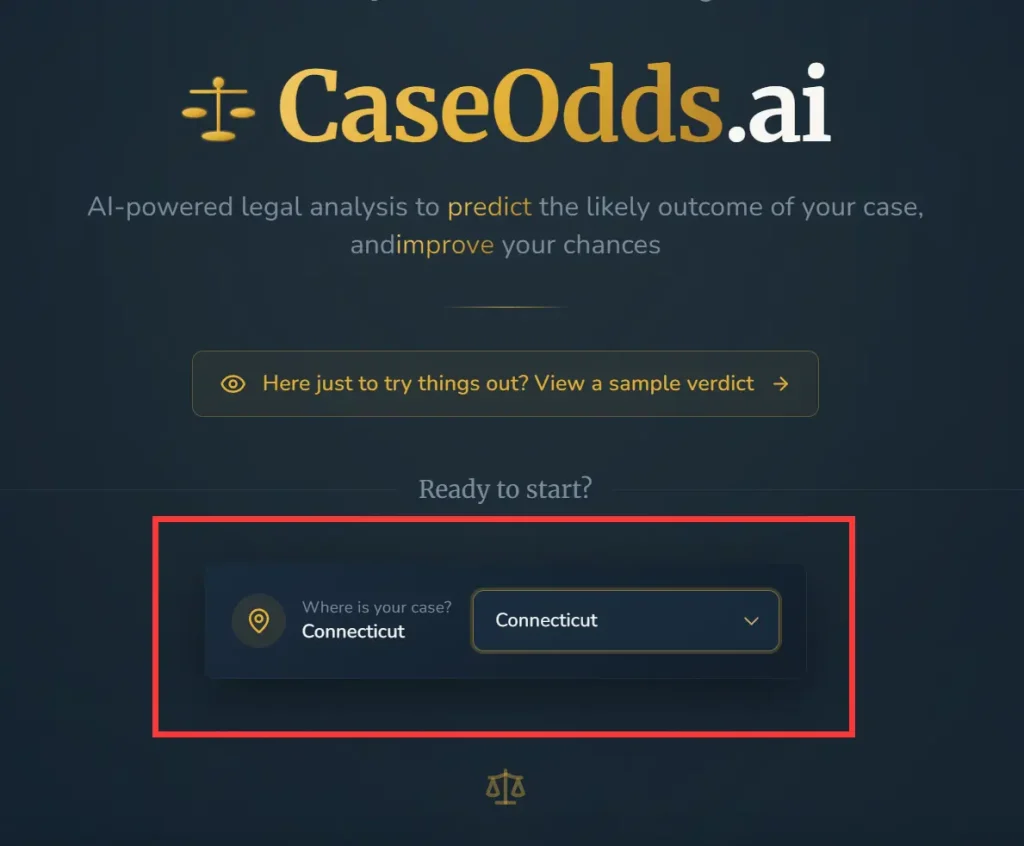
2. Choose your country and specific region from the dropdown menus. This selection affects which legal precedents and statutory frameworks the AI applies to your analysis. Different jurisdictions maintain distinct legal standards (particularly for issues like tenant rights, employment law, and contract enforcement).
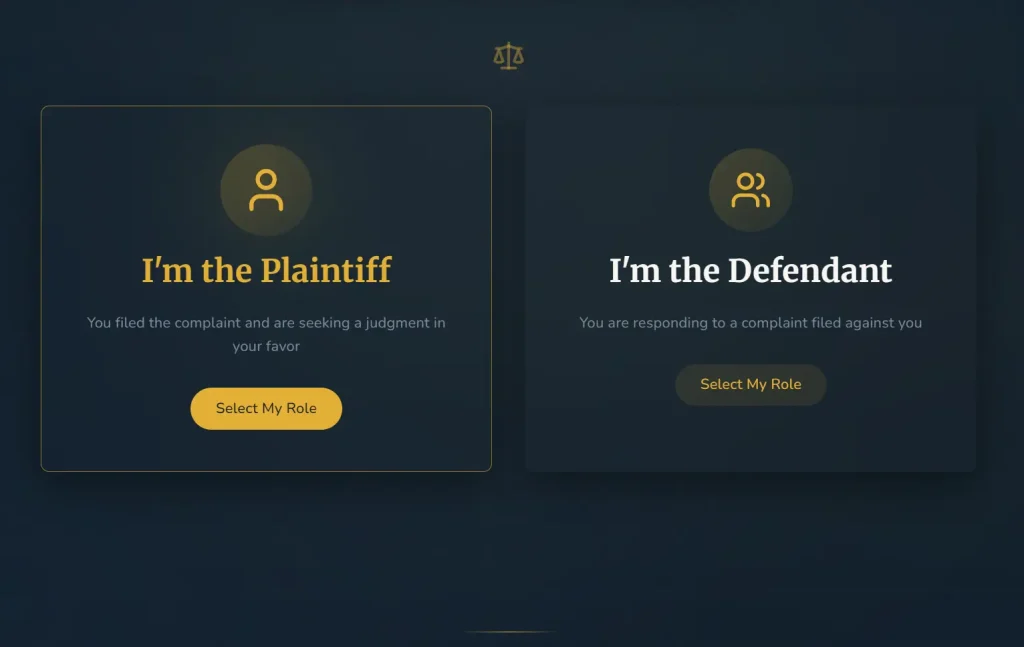
3. Select whether you’re the plaintiff (the party initiating the legal action and seeking judgment) or the defendant (responding to claims filed against you). This designation affects how the AI evaluates burden of proof, available defenses, and strategic positioning.
4. Provide your case information. Upload PDF documents containing relevant materials such as complaint documents, contracts, correspondence, demand letters, or supporting evidence. Or type a detailed description of the events in the text box.

5. Click “Analyze My Case” to initiate the AI processing. The system typically completes analysis within 2-3 minutes. The AI examines applicable laws, reviews similar case precedents, evaluates evidentiary strength, and identifies procedural considerations.
Pros
- No Financial Commitment: Run complete legal analyses without credit cards, subscriptions, or hidden fees.
- Rapid Turnaround: The system delivers complete analyses in minutes compared to days or weeks for traditional attorney consultations.
- Detailed Result: Each analysis covers multiple dimensions, including outcome prediction, strategic strengths, vulnerabilities, procedural considerations, and actionable next steps.
- Privacy Assurance: The encrypted system protects sensitive case information. Users can explore legal options without concerns about data exposure or third-party access.
- Comparative Benchmarking: The AI draws from thousands of precedents to contextualize individual cases.
Cons
- Limited Human Judgment: The AI cannot replicate the nuanced assessment that experienced attorneys provide. Complex cases involving novel legal theories or unique factual situations may exceed the system’s analytical capabilities.
- Jurisdiction Variations: State and local courts sometimes deviate from broader legal patterns. The AI may not capture specialized local practices or recent precedential shifts in smaller jurisdictions.
- Preliminary Assessment Only: The analysis serves as an initial evaluation tool, not a substitute for formal legal representation. Courts require proper legal procedures that AI cannot perform.
Related Resources
- American Bar Association: Access free legal guides and lawyer referral services for various legal issues.
- Nolo Legal Encyclopedia: Read detailed articles explaining common legal problems and procedures across multiple practice areas.
- Justia: Search free case law databases and connect with attorneys in your jurisdiction.
- Court Listener: Search millions of court opinions and track cases across federal and state courts.
FAQs
Q: How accurate are CaseOdds.ai predictions compared to actual court outcomes?
A: The platform analyzes thousands of legal precedents to generate predictions, but actual accuracy depends on case complexity and jurisdiction. Studies on legal AI prediction tools show accuracy rates between 79-85% for straightforward matters. Cases involving novel legal theories, complex factual disputes, or subjective judicial determinations may produce less reliable predictions.
Q: Can I use CaseOdds.ai analysis as evidence in court?
A: No. Courts generally do not accept AI-generated legal analyses as admissible evidence. The tool provides strategic guidance for decision-making but doesn’t carry the weight of expert testimony or formal legal opinion. If you need documented legal analysis for court proceedings, you must engage licensed attorneys who can provide sworn testimony and professional opinions subject to cross-examination.
Q: What types of cases work best with CaseOdds.ai?
A: The platform performs strongest on common legal disputes with established precedents. Small claims matters (landlord-tenant disputes, security deposits, contract breaches), employment issues (wrongful termination, wage claims), consumer disputes, and personal injury claims typically produce reliable analyses.
Q: Does CaseOdds.ai replace the need for an attorney?
A: No. The tool provides preliminary assessment to help you make informed decisions about pursuing legal action or seeking representation. Attorneys offer services that AI cannot replicate (court representation, formal document filing, discovery procedures, negotiation strategy, and adapting approach based on case developments).
Q: How does CaseOdds.ai protect my case information?
A: The platform employs encryption protocols to secure data during transmission and storage. According to their privacy policy, they don’t share user information with third parties or sell data to advertisers. Case details entered aren’t used to train AI models on identifiable information.
Q: Can I run multiple analyses for the same case with different scenarios?
A: Yes. The free structure allows unlimited analyses. You can test different factual scenarios, evaluate both plaintiff and defendant perspectives, or refine your case description based on initial results.